—
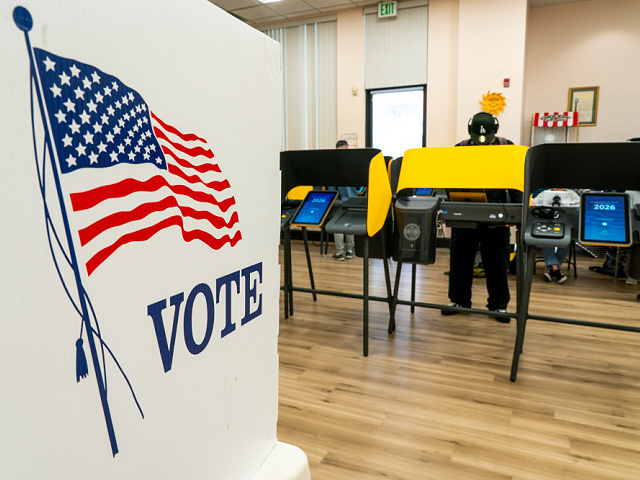
A “massive concession” claim emerged Tuesday in the federal dispute over California’s voter rolls after Los Angeles County officials told a court they cannot independently verify voters’ citizenship beyond what voters state on their registration forms.
Bill Essayli, the first assistant U.S. attorney for the Central District of California, made the claim in an X post highlighting a declaration filed in opposition to the Justice Department’s request to set aside mail ballots from suspected noncitizens.
“Massive concession: Los Angeles election officials just told a federal court they have no independent way to verify citizenship beyond what voters attest. (They simply take their word for it.)” Essayli wrote.
“Under federal law, only citizens may vote in federal elections. Yet California has not acted on the list of 20,000 suspected noncitizens or agreed to set aside their ballots. American citizens’ votes are being diluted in California.”
Essayli attached an excerpt from a court declaration stating that the registrar lacked the records and authority to independently verify voters’ citizenship. The highlighted passage addressed the federal government’s proposal to require the registrar to check the citizenship of each affected voter.
“The Registrar is not equipped or authorized to verify voter citizenship because it does not independently house citizenship-related information beyond the voter attestation as identified in federal and state law,” the declaration stated.
The declaration listed immigration, travel, and naturalization records among the information the office does not independently maintain. The excerpt also said California had not authorized use of the federal Systematic Alien Verification for Entitlements, or SAVE, program for the 2026 general election.
The declaration further said the DOJ had not explained what information it would provide to help the registrar determine whether the flagged voters were citizens.
The Justice Department had already sued California on October 15, seeking to stop the state from counting mail ballots from more than 20,000 registered voters whom federal agencies identified as likely noncitizens until their citizenship could be verified. California officials challenged the evidence supporting the list and the government’s demand for a review within 48 hours.
On Monday, the department announced criminal charges against 28 lawful permanent residents accused of illegally registering to vote, falsely claiming U.S. citizenship to register or vote, or unlawfully casting ballots in federal elections. Prosecutors alleged that most had voted after fraudulently registering, and authorities arrested 11 of the defendants that day. All 28 defendants appeared on the list of more than 20,000 suspected noncitizen registrants, according to the DOJ.
The declaration does not establish how many suspected noncitizens actually voted. A separate concern involves ballots cast in eligible voters’ names without their permission, conduct documented in a previous federal prosecution.
In New Jersey, Atlantic City political organizer Craig Callaway was sentenced to two years in prison in July 2025 for a fraudulent mail-ballot scheme. Prosecutors said ballots collected by Callaway or his subordinates were cast in the names of people who said they had not voted or authorized anyone to vote for them. Many were counted.
Separately, in Maine, Maine Wire editor Steve Robinson posted a photograph he said showed Somali translators helping elderly Somali voters in Lewiston. He said reporter Jon Fetherston witnessed the assistance the previous day.
Yesterday in Lewiston: @TheMaineWire Reporter @MaineWireJon watched Somali “translators” help several elderly Somalis vote.
Notably, all the “translators” work for taxpayer-funded NGOs and Medicaid agencies.
This is how you turn a working class town into a Dem stronghold. https://t.co/RHWSFpRSkT
— Steve Robinson (@SteveRob) October 20, 2026
Robinson’s post did not establish that anyone unlawfully collected or submitted ballots, that the voters were ineligible, or that the translators acted against their wishes.
Maine allows voters who need help reading or marking a ballot to receive assistance, subject to restrictions on who may provide it. Such assistance must follow the voter’s wishes.